
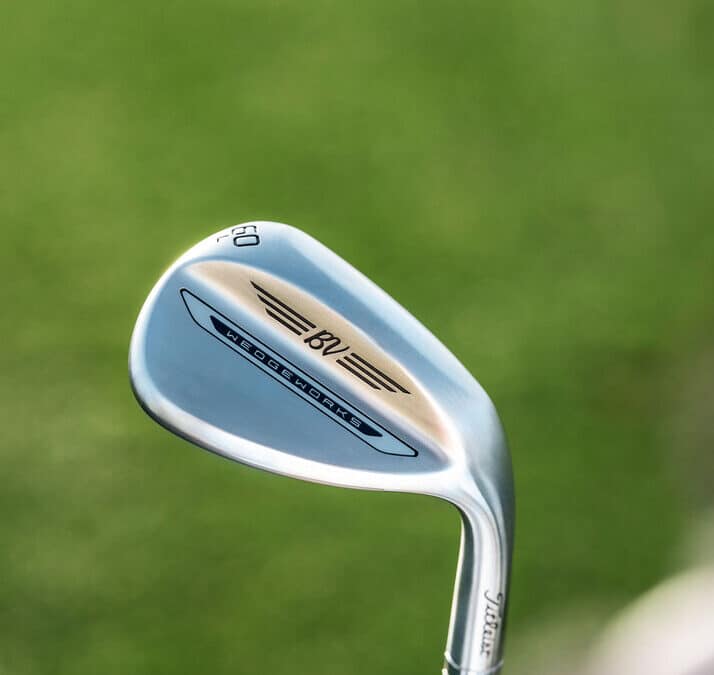
There are clubs’ golfers use. And then there are clubs’ golfers develop relationships with. For me, wedges have always belonged to the second category. I have been a wedge fan for as long as I can remember playing golf. One could probably say I collect them, though not in the ornamental sense, where they sit in a room as artifacts, polished and admired from a distance. I mean collect them in the way a player collects experiences, different shapes, grinds, finishes, faces, weights, sounds, lies, and memories.
I have played wedges from almost every kind of manufacturer. Titleist Vokey and Vokey Forged models from Japan. TaylorMade RAC, MG2 TW wedges. Carnahan Golf forged wedges. Bridgestone. Cleveland. Mizuno. And lately, Honma.
The wedge has always fascinated me because it is the least abstract club in the bag.
Drivers can quickly become conversations about launch, spin, ball speed, face angle, tee height, shaft profile, and fitting charts. Irons can become conversations about loft, offset, forgiveness, descent angle, peak height, and distance gaps.
Fairway woods and hybrids can become negotiations between confidence and necessity.
But wedges are different. A wedge eventually asks a more immediate questioncan you see the shot? Not merely the yardage. Not merely the loft. Not merely the lie. The shot.
The wedge is the club where imagination, turf, face, bounce, feel, and intention meet. It exposes whether a player is actually in contact with what is happening. A wedge shot is not only a motion. It is a conversation with the ground, the ball, the lie, the landing area, the slope, the grain, the wind, and the player’s own attention.
That is why the history of wedges is not merely a history of equipment. It is a history of how golfers have tried to create more options closer to the hole.
From Escape Club to Creative Instrument
The modern wedge begins with a practical problem, getting the ball out of sand. Gene Sarazen’s contribution to the sand wedge was not merely that he added loft. It was that he understood the underside of the club mattered. The genius was bounce. The sole could interact with the sand in a way that allowed the club to slide rather than dig. That changed everything. Before that, lofted clubs
existed, but the modern sand wedge introduced a different idea into golf equipment: the bottom of the club was not incidental. It was part of the shot.
That one insight opened the door to nearly everything that came later.
Bounce, camber, sole width, trailing-edge relief, heel relief, toe relief, leading-edge shape, and grind all come from the same basic realization: wedge play is not only about the face contacting the ball. It is about how the club moves through the surface beneath the ball.
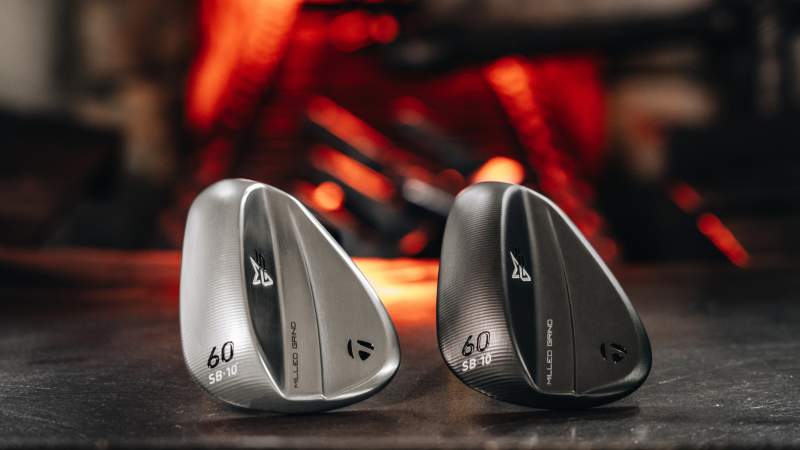
Milled Grind Wedges (TaylorMade Golf)
That is why wedges became so personal. Two players can use the same loft and produce entirely
different results because they deliver the club differently. One player is shallow. Another is steep. One plays on firm turf. Another plays on soft Bermuda. One likes to open the face. Another prefers square-faced simplicity. One wants the club to slide. Another wants the club to resist digging. One player wants the sole out of the way. Another wants the sole to save him.
This is why the wedge category became more sophisticated over time.
It had to.
The Wedge Becomes a Specialist
For decades, many golfers carried a
pitching wedge and a sand wedge. That was enough because the rest of the game was not yet organized around the obsessive precision of modern yardage systems. Then lofts changed. Pitching wedges became stronger. Greens became faster. Players became better. Agronomy improved. Course setups became more demanding. The short game became less about simply escaping trouble and more about controlling trajectory, spin, landing angle, release, and height.
The wedge family expanded. Gap wedges appeared because pitching wedges had become too strong to transition naturally into sand wedges.
Lob wedges became common because players needed height, softness, and creativity from short-sided positions. And then, inevitably, wedge design became its own world.
This is where Vokey, Cleveland, TaylorMade, Mizuno, Bridgestone, Carnahan, and the Japanese forged-wedge world became so interesting. The wedge was no longer just a lofted iron. It was now a specialty tool.
Cleveland helped make the dedicated wedge category mainstream. Vokey turned wedge fitting, grinds, and tour feedback into a language of its own. TaylorMade produced memorable designs, such as the RAC, which many players still remember because they had that rare combination of shape, sound, and confidence. Mizuno brought the forged-feel conversation. Bridgestone brought an understated Japanese seriousness. Carnahan’s forged wedges had a boutique quality, a sense of craftsmanship outside the mass-market wedge machine. And the Japanese forged Vokey models always had a special appeal because they seemed to combine two worlds, the tour-proven Vokey shape and the dense, precise feel associated with Japanese forging.
For someone who loves wedges, these differences matter. Not because one is automatically superior. Because each wedge asks the player a slightly different question.
The Memory of Feel
Some wedges stay in memory because they performed. Others stay in memory because they looked right. The best ones do both. The TaylorMade RAC wedges were among those wedges that many serious players remember fondly. They were not merely technical objects. They had personality. They sat well.
They looked playable. They did not feel as if a computer had designed all the humanity out of them.
The best wedges each have that quality. You set them down and the shot seems possible. That matters more than golfers often admit. A wedge is not only a performance object. It is a permission object. It either invites the player to create, or it subtly discourages imagination.
A good wedge does not tell you exactly what to do. It lets you see more. That is probably why I have always liked wedges. They preserve the human part of golf. They resist the increasingly sterile idea that golf is
best understood as a system of optimized numbers.
A wedge does not care about your spreadsheet. It cares about whether you can feel the bottom of the swing.
The Groove and Face Technology Era
The modern wedge also became a face-technology story. Grooves, milling, friction, surface roughness, moisture management, and spin consistency became major design battlegrounds. Wedge companies began competing not only on shape and sole design, but on how much control the face could provide from different lies. Then the groove-rule era
changed the conversation again. Manufacturers could no longer rely in the same way on older aggressive groove geometry. The question became: how do you preserve spin, control, and predictability within the rules?
The answer was face precision. Milling became more important. Micro-texture became more important. Groove-edge quality became more important. Designers began thinking about the entire face, not just the grooves themselves. That is one reason modern wedges have become so technically sophisticated. The best ones are not merely shaped well. They
are engineered at the face level for friction, launch, spin stability, and performance from imperfect lies.
But here is the caution, more face technology does not automatically make a wedge better for a particular player. A wedge still has to fit the player’s eye, delivery, turf, and imagination.
Why Wedges Are So Personal
A driver can be fitted by numbers with some degree of confidence. Launch, spin, ball speed, face impact, and dispersion tell a useful story.
Wedges are harder. The full wedge swing is only one small part of wedge
play. The real life of a wedge happens in partial shots, awkward lies, bunker shots, open-face shots, dead-hand pitches, toe-down chips, low spinners, soft floaters, and shots where the player is inventing something from a situation that cannot be completely described by a launch monitor.
This is why I have always been skeptical of treating wedge gapping as if it were merely a yardage problem. Yes, loft matters. Yes, distance intervals matter. Yes, bounce matters. But a wedge is not only a number in the bottom of the bag. A wedge is a relationship between the player and the ground.
That is why I have never been bothered by overlap. My pitching wedge can fly a full number, a three-quarter number, and a soft number. My sand wedge can be a stock wedge, a soft wedge, a bunker club, or a pitching club. My lob wedge is not there to be hit hard. It is there to create height, softness, and options. The industry often treats overlap as inefficiency.
My Three-Wedge Structure
As I always have, I only carry three wedges, the pitching wedge from the iron set. A 56-degree sand wedge. A 60-degree lob wedge. That is it. I have never felt the need to turn the bottom
of the bag into a committee meeting. I do not want four or five wedges, each assigned to some narrow yardage category. My pitching wedge is part of my iron set, and I use it creatively. It is not merely a full-swing club. It can be flighted, softened, shortened, and shaped. It can cover multiple distances because I do not see overlap as a problem.
I see it as freedom.
Then the 56 and 60 give me the short-game range I need. The 56 is the working wedge. It handles fuller wedge shots, softer approaches, bunker shots, and standard green-side shots. The 60 is the higher-lofted
specialty club, used when the shot asks for height, softness, or more face manipulation.
That simple structure matters to me. It keeps the wedge setup from becoming too intellectual. I do not want to stand over a shot choosing between five different tools and three different systems. I want to see the shot, feel the lie, understand the turf, and respond.
Bounce Is Not a Crutch
One of the reasons certain wedges appeal to me is that I prefer bounce. That may sound simple, but it is central to how I play wedge shots. I like using the bounce. I like feeling
the sole interact with the ground. I do not want a wedge that demands perfect leading-edge precision on every shot. I want a wedge that allows the club to move through the turf, sand, and Bermuda without digging.
That is especially important in South Florida conditions. Around the greens, bounce gives me permission. It lets the club slide. It lets me open the face without feeling as if the leading edge is going to grab. It allows the shot to be played with the sole, not merely with the edge. That is a very different relationship to the ground.
For me, bounce is not a crutch. It is information. It is an invitation to use
the ground rather than fear it. A poorly shaped high-bounce wedge can feel clumsy. It can bounce into the ball, sit too high, or make delicate shots feel awkward. But a well-shaped high-bounce wedge can be incredibly versatile. It can be forgiving without being dull. It can let the player use the ground aggressively while still maintaining touch. The important question is not simply how much bounce the wedge has. The important question is whether I can use the bounce.
The Honma Chapter
Recently, I have been using Honma wedges and really enjoying them. That does not surprise me.
Honma, at its best, has a way of making clubs that feel serious without being loud. There is a certain quietness to their better designs. They do not always scream for attention. They invite use. The T//World W5 Copper wedge fits that description well. The W5 Copper takes a traditional wedge idea and gives it just enough help without turning it into a cartoon. It has a slightly larger head, which adds forgiveness and gives the player a wider effective hitting area. That matters in a wedge because confidence at address is not trivial. A wedge that looks too small can make the player careful. A wedge that looks slightly more generous can free the player to respond.
The W5 also uses a double-milled face and what Honma calls a Bite Rib Line a protrusion-shaped rib between the score lines. The purpose is spin and control, but the more interesting point is how this fits the modern wedge story. After the groove-rule era, wedge makers had to become more intelligent about the entire face. Honma’s W5 is part of that movement: not merely grooves, but milling, rib structure, and face texture.
Then there is the copper finish.
The copper finish matters visually and sensorially. It reduces glare. It gives the head a warmer, more premium look. It helps prevent rust. It also contributes to the perception of feel. Whether one describes that as technically measurable or simply experienced by the player, it matters because wedges are feel clubs. A wedge must sound and feel like something the player trusts.
My current W5 setup is simple, 56 degrees with 12 degrees of bounce. 60 degrees with 12 degrees of bounce. That has worked well because both wedges give me enough sole to use the ground. The 56 has enough bounce to be stable and useful from sand, pitches, and fuller approaches. The 60, even with its higher loft, still has enough bounce to keep it from becoming too sharp or too demanding.
The W5 Copper fits my approach because it gives me enough without giving me too much.
The head is slightly larger, but not clumsy. The copper finish is refined, but not ornamental. The face technology is real, but not visually distracting. The sole options make sense, but do not force the player into an elaborate fitting identity. It is a wedge that lets me play golf. That sounds simple, but it is rare.
The New Honma Raw 2026
The new Honma Raw 2026 wedge seems to take the W5 idea in a more specialized direction.
The W5 is traditional, copper-plated, soft-carbon-steel, and familiar. It is a wedge for players who want a classic object with modern spin features. The slightly larger head gives it forgiveness. The double milling and Bite Rib Line give it friction and control. The copper finish gives it beauty, warmth, reduced glare, and protection from rust.
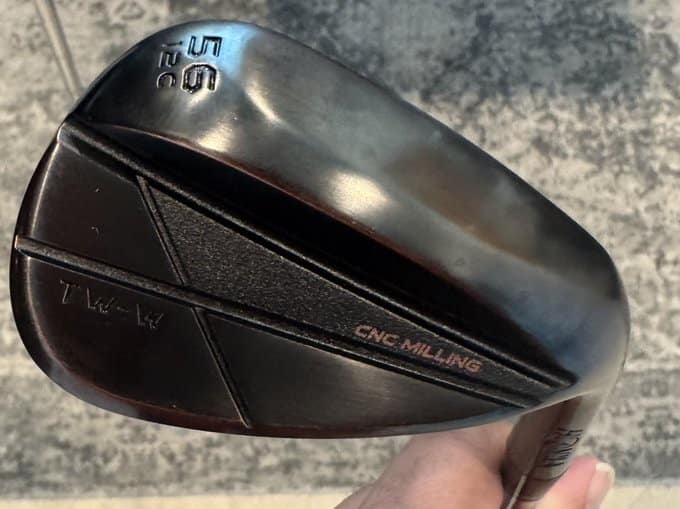
Honma Raw Wedge
The Raw 2026 is a different concept.
It introduces Honma’s HMSS soft stainless material. That is significant because raw wedges have always created a tradeoff. Players like the raw look and the directness of an un-plated face, but many do not love rust, maintenance, or the anxiety that the wedge will change too much over time.
Honma’s Raw 2026 attempts to solve that by using a soft stainless material that preserves soft impact feel while offering more rust resistance than traditional raw carbon steel. It is a raw-style wedge designed for players who like the honesty of an un-plated club but do not want the old raw-wedge baggage.
That is an interesting evolution. The Raw 2026 also expands the loft structure. It goes from 46 degrees all the way to 62 degrees, which makes it less like a few specialty wedges and more like a complete short-game system. The lower lofts are clearly meant to transition from the iron set. The AW is especially interesting because it is designed more like an iron extension, with a semi-cavity construction and standard iron-style grooves rather than a purely specialty-wedge identity.
That matters because one of the great problems in modern wedge design is the awkward transition from pitching wedge to specialty wedge. The pitching wedge in an iron set often looks and behaves like an iron. Then suddenly the gap wedge or sand wedge looks like a different species. Honma is trying to smooth that transition.
For many players, that is useful.
For me, it raises a different question, do I actually want to solve that transition with another club, or do I want my pitching wedge to remain a creative club?
At the moment, I prefer the latter. My pitching wedge is not just a full-swing club. It is a shot-making club. I would rather hit it multiple distances than insert another wedge simply because the industry says a gap must be filled.
Still, the Raw 2026 concept is smart. It is not merely another wedge. It is Honma trying to simplify a category that has become too complicated.
W5 Copper vs. Raw: Two Expressions of the Same Philosophy
The more I have used both Honma wedges, the more I see that the W5 Copper and the new Raw head are not really competing ideas. They are two slightly different expressions of the same wedge philosophy.
I like them both. The W5 Copper has a traditional richness to it. It looks beautiful, sits well, and gives me the sense of a premium, classic wedge with modern face technology. The copper head has a firm-soft density to it substantial, stable, and very clear through impact.
The new Raw head feels a bit softer to me. That is the most interesting difference. The Raw does not simply look more stripped down or more utilitarian. It actually gives me a slightly softer sensation at impact compared with the W5 Copper. That matters because wedges are not only technical tools. They are feel
instruments. The difference between good and great in a wedge is often not whether it spins enough, but whether it gives the player enough information to trust the shot.
The Raw wedges I am interested in are also simple, 56 degrees with 16 degrees of bounce. 60 degrees with 16 degrees of bounce. On paper, some players might look at that and think, “That is a lot of bounce.” For me, that is not necessarily a problem. In fact, it may be the point. I do not view bounce as something to avoid. I view bounce as something to use. More bounce, when the sole is shaped properly, can make the wedge more
playable, not less. It can allow the club to resist digging, especially from soft sand, Bermuda lies, and shots where the club needs to pass through the ground rather than stab into it.
The Raw 56 and 60 interest me because they are not asking me to add wedges. They are not asking me to change my philosophy. They are asking whether a softer-feeling head with more bounce can give me even better contact with the turf. That is a very different question from optimization. It is not, “Can this wedge fix my short game?” It is, “Does this wedge let me sense the shot more clearly?” That is the standard I care about.
The Simplification Problem
Modern wedge fitting can become absurdly complicated. Loft, bounce, grind, sole width, camber, leading edge, shaft, swing weight, finish, groove condition, face texture, lie angle, and turf type all matter. That is true. But the player can drown in truth.
At a certain point, the wedge conversation becomes so technical that the player stops seeing shots. He starts seeing categories.
Am I steep or shallow? Do I need low bounce or high bounce? Am I a C-Sole player or an S-Sole player? Should I
carry 50, 54, 58? Should I carry 52, 56, 60? Do I need a gap wedge? Do I need full-face grooves? Do I need raw? Do I need copper? The questions are not useless. But they can become primary. And when the questions become primary, the shot itself becomes secondary.
This is where I find Honma’s Raw 2026 interesting. The stated idea is to make wedge selection easier, not more complicated. The bounce choices are more clearly separated. The loft-specific sole shapes are easier to understand. The material solves the raw-versus-rust concern. The AW blends toward the iron set. The sand wedge and lob wedge become more specialized for short-game control.
In other words, the Raw 2026 is not just adding options. It is trying to make the options legible. That is a worthy goal. But for the better player, the final test remains the same, does the wedge disappear?
What Makes a Great Wedge?
A great wedge does not call attention to itself. It does not force a method. It does not require the player to become a technician before every shot. It gives enough feedback to learn, enough forgiveness to play, enough sole to interact with the ground, enough face
to create spin, and enough visual confidence to let the shot appear.
That is why my wedge history matters to me. The RAC wedges, the Vokeys, the Japanese forged models, the Carnahan forged wedges, Bridgestone, Cleveland, Mizuno, TaylorMade MG2 TW, and now Honma each one represents a slightly different answer to the same question, how does a player create near the green?
Some wedges are blunt instruments. Some are scalpels. Some are beautiful but demanding. Some are technically impressive but emotionally dead. Some look plain and perform brilliantly. Some make you want to practice. Some make you want to put them back in the garage. The best wedges make you curious. They make you want to hit one more shot. Not because you are chasing a number, but because you are exploring what is possible.
The Wedge as a Philosophy
In the end, wedges reveal something about how a person plays golf. Some players want certainty. They want every wedge to have a number. They want the 50 to go this far, the 54 to go that far, and the 58 to go another distance. That is not wrong. It may work beautifully for them.
But I have never seen wedge play that way. I see wedges as instruments of possibility. My pitching wedge does not have one distance. It has many. My sand wedge is not simply a 56. It is a way to flight, soften, splash, release, check, or survive. My lob wedge is not there to impress anyone. It is there for the moments when the shot asks for height, softness, or touch.
This is why I resist the modern obsession with clean gaps. Golf is not played in clean gaps. Golf is played from uneven lies, into uncertain winds, over bunkers, from Bermuda rough, off tight turf, under pressure, and from distances that do not care
what the launch monitor says. Wedges are the clubs that admit this. They are the clubs that say: there is no single answer here. There is only the shot.
Conclusion: Why I Love Wedges
I love wedges because they preserve the artistic part of golf. They are technical, yes. The history of wedges is full of invention: Sarazen’s bounce, Cleveland’s classic shapes, Vokey’s tour grinds, groove-rule adaptations, milled faces, full-face scorelines, raw finishes, copper finishes, forged heads, cast heads, boutique grinds, and now Honma’s HMSS soft stainless Raw 2026 design.
But beneath all of that, the wedge remains deeply human. It is the club that asks the player to be present. To see. To feel. To respond. To create. That is why I have owned so many of them. That is why I remember certain models so vividly. That is why the RAC wedges still matter in memory. That is why forged Japanese wedges have always appealed to me. That is why Carnahan, Bridgestone, TaylorMade, Cleveland, Mizuno, Vokey, and Honma all occupy different places in my wedge history.
They are not just tools. They are records of the shots I have imagined. And maybe that is the real history of the wedge. Not just how the club changed. But how it allowed players to see more.
Feature Photo Courtesy of the Acushnet Company