
By Brian Sommer
There is something revealing about attending an outdoor fitting for the new Titleist GTS line, only to discover that the doctrine under examination is essentially the same one that arrived two years earlier beneath the solemn banner of “Generational Technology.” One is permitted, at this point, a small but necessary question: What precisely is a “generation” in golf equipment terms?
Because if a generation now survives for roughly the lifespan of refrigerated produce, then we are no longer discussing engineering revolutions. We are witnessing the collapse of language itself. Time, in the modern golf industry, has been reduced to a product cycle. History is not something from which we learn. It is something we replace on schedule. And so, the ritual continues. GT becomes GTS. Yesterday’s breakthrough becomes today’s baseline architecture. The golfer is expected to receive this revelation with appropriate reverence, as though the laws of physics have recently undergone a firmware update.
The entire exercise would be intolerably absurd were it not so financially successful. Yet amid this carnival of overstated novelty, there remains a curious irony by the standards of modern equipment marketing, The Acushnet Company’s Titleist brand is practically monastic in its restraint. Unlike certain competitors who appear convinced that golf clubs should resemble stealth aircraft, alien weaponry, or props discarded from a Marvel production meeting, Titleist persists with an almost stubborn conservatism. No neon panic attacksmasquerading as design language. No tortured geometries suggesting velocity has finally been conquered through the strategic deployment of matte carbon.
Instead, there is continuity. A kind of institutional patience. Perhaps antiquated. Perhaps wise. A quiet belief that golfers do not necessarily require visual hysteria to be persuaded. This matters more than the industry admits. Golf is already a game of chronic overcomplication. Most players arrive at the first tee carrying enough swing thoughts to destabilize a parliamentary coalition. The last thing they require is equipment demanding psychological attention before the round has even begun. And this is where the previous GT generation quietly distinguished itself. The most noticeable improvement was not distance, nor forgiveness, nor any of the launch-monitor liturgy endlessly recited by YouTube equipment evangelists.
It was sound.
The acoustics became denser, cleaner, more compressed, less hollow and theatrical. The driver no longer sounded like an empty promise being shouted into a warehouse. It sounded intentional. This matters enormously because sound in golf is not merely feedback. It is persuasion. A driver that sounds fast is presumed fast. A driver that sounds stable is presumed forgiving.
Long before the golf ball has revealed the truth of the shot, the golfer’s nervous system has already rendered judgment. Elite players understand this instinctively. They are rarely seduced by sonic fireworks. They prefer restraint. Compression. Density.
The sensation that nothing unnecessary has occurred at impact. Because unnecessary noise, in golf as in politics, is usually compensation for insecurity.
The new Titleist GTS line arrives, predictably, accompanied by language carefully engineered to imply refinement and revelation: improved aerodynamic shaping, optimized weighting systems, cleaner model separation, better retention characteristics. Each of which are likely true. And all of which conceal the central reality the industry cannot quite bring itself to state plainly; modern driver design is no longer an arena of breakthroughs. It is an arena of constrained optimization. The governing bodies wrote the constitution years ago. COR limits cap energy transfer. MOI limitations constrain forgiveness. Head-size regulations constrain geometry. Engineers are no longer inventing entirely new freedoms. They are negotiating within established limitations. They are not abolishing tradeoffs. They are redistributing them. This is not criticism. In fact, it is healthier than the grotesque overpromising of previous decades, when every spring release was marketed as though it might cure a slice, restore lost masculinity, and add twenty yards simultaneously.
At least now the language has partially learned to blush. The claims are more cautious: “improved stability,” “refined launch consistency,” “better speed retention.” The vocabulary has become managerial rather than messianic. And frankly, that is progress of a sort.
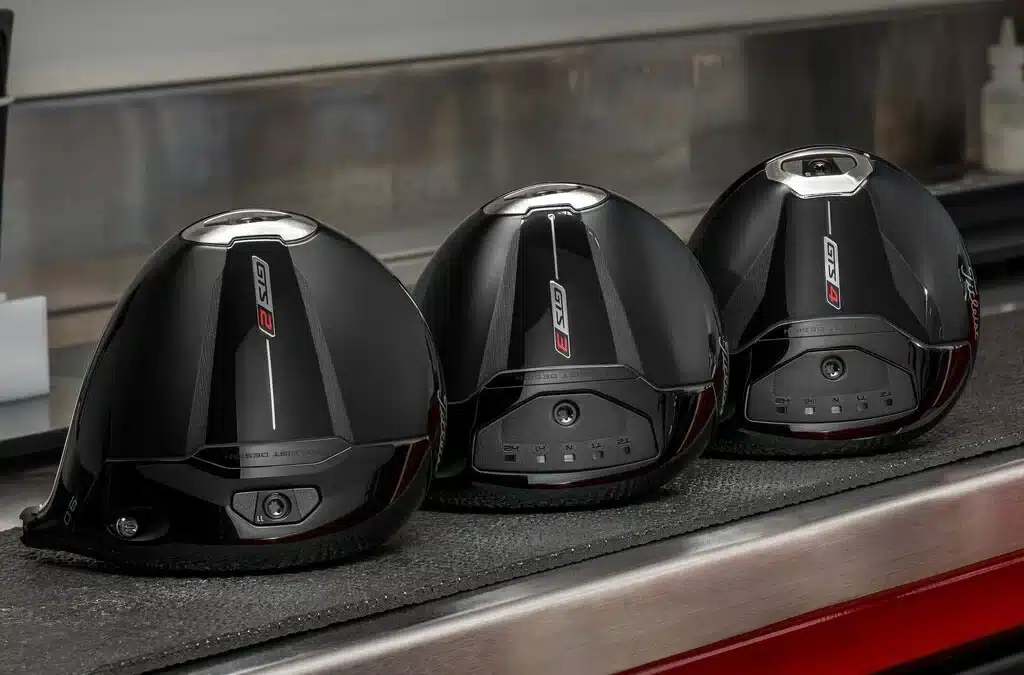
The structure of the GTS lineup itself reveals something interesting. The GTS2, GTS3, and GTS4 now occupy more
coherent territory. The 2 is the stability-and-forgiveness option. The 3 remains the adjustable middle ground. The 4 attempts to provide lower spin without the historical punishment previously associated with such heads. This is rational segmentation. But it is also an admission. An admission that previous segmentation had drifted dangerously close to redundancy. Earlier generations often required a degree in interpretive marketing simply to understand why multiple heads existed at all. The distinctions were so subtle that consumers frequently purchased narratives rather than products.
And yet beneath all three heads lies the same eternal contradiction. Each is still trying to be forgiving without becoming sluggish, fast without becoming unstable, workable without becoming punitive. In other words, each is attempting to escape tradeoffs. A task physics has never once consented to.
Which brings us to the fitting itself.
I tested the new GTS lineup outdoors in South Florida under the sort of conditions golf was actually designed to inhabit; heat, wind, grass, uncertainty. Not inside a simulator chamber where every variable except the human being has been sanitized into submission.
The wind sat around 10 miles per hour slightly off the left an irritatingly honest wind for a right-handed golfer because it exaggerates curvature mercilessly. A controlled fade can quickly become surrender. An attempted draw can mutate into a hook worthy of psychiatric evaluation. This, incidentally, is why the modern slogan of “taking one side of the course out ofplay” remains one of the more hilariously dishonest clichés in golf instruction. Human beings do not remove half the golf course from existence through positive thinking. They merely reduce probabilities while pretending certainty has been achieved.
Like many players, I prefer seeing the ball move right-to-left. I have never entirely understood the modern obsession with hitting nothing but fades, as though ball flight itself has become a moral hierarchy. Some of the best drivers of the golf ball, including Nelly Korda have long preferred turning the ball over with the driver.
The fitting began with my current gamer: a 9-degree Honma TW777 paired with a Vizard Blue 6X shaft. It remains an excellent driver. Like most modern OEM products, it is extraordinarily competent. This is another uncomfortable truth the equipment-content economy rarely acknowledges: it is genuinely difficult to find a bad major-manufacturer driver in 2026. We are arguing over refinements, not catastrophes. My primary issue with the Honma has never been speed or forgiveness. It has been descent angle. The flight occasionally climbs steeper than I prefer, producing a ball flight with less penetration than I would like. Though honesty compels one to add that this may be user error rather than engineering failure. The modern golfer’s greatest talent is assigning metaphysical significance to his own inconsistency.
I began testing with the GTS2 paired with a Graphite Design Tour AD VF 6X shaft. Historically, the “2” line has occupied the higher-stability category within the Titleist ecosystem the closest equivalent to what other companies would label “Max.” Immediately it became apparent that while spin remained controlled, generally in the mid-2000s even on imperfect strikes, the launch window did not suit my eye. Ball speed retention was solid, but the flight lacked the shape and penetration I prefer visually.
This surprised me because I fully expected to enjoy this head. Many tour players and, less importantly, many influencers have gravitated toward it. But golf remains gloriously indifferent to consensus opinion. The GTS2 exited the discussion fairly quickly.
Then came the GTS4. Historically, the “4” line occupied the lower-spin category and carried with it the usual penalties, smaller profiles, reduced forgiveness, greater volatility. But the new version has evolved. The head is now 460cc, and the shaping immediately stood out.
At address it looked magnificent. Deep-faced. Compact without appearing hostile. It possessed something faintly reminiscent of the old Titleist 975D lineage, classical Titleist aesthetics modernized without becoming cartoonish. And buried beneath all the launch-monitor priestcraft and aerodynamic euphemism lies a smaller but revealing detail that likely contributed to why I gravitated toward this head: tee height. I have always preferred teeing the golf ball comparatively low, using 55mm, or roughly 2.12-inch tees.
Many modern drivers, particularly those designed around maximum-forgiveness geometry, have become progressively
shallower in face depth, encouraging higher tee positions and aggressively upward attack angles.
There is nothing inherently wrong with this. But golf remains stubbornly individual. For players who prefer seeing the ball framed lower against the face players who dislike the sensation that the ball is hovering above the crown like an unstable weather balloon the geometry at address matters enormously. Confidence in golf is often discussed as though it were mystical, when in reality it is frequently something embarrassingly simple: Does the club look correct to the eye? The GTS4 did.
Its deeper face immediately suited the way I naturally set the club behind the ball. I did not feel compelled to artificially raise my tee height or manipulate my setup merely to accommodate the architecture of the driver. The club accepted my preferences rather than demanding ideological conversion from them. And this speaks to a larger problem within modern golf culture, the increasingly dogmatic belief that all golfers should converge toward a singular “optimal” technique. One now hears endless declarations about maximizing upward angle of attack and pursuing ever-higher launch-and-low-spin combinations as though these were commandments delivered from Sinai by a TrackMan technician.
But golf has always resisted universalism. There are players who prefer flatter trajectories. Players who like seeing the ball bore through the wind rather than ascend into it. Players who feel more connected to the strike when the ball sits slightly lower against the face. The deeper-faced GTS4 accommodated
this preference beautifully. The acoustics were exceptional as well. More muted. Denser. More “old Titleist.” Immediately the launch window improved. Spin dropped into the low 2000s, but crucially the ball did not fall from the sky. This is where modern driver refinement genuinely matters not in perfect strikes, but in retaining functionality when the strike migrates away from perfection. And because we are human beings rather than robots, strikes inevitably migrate.
The most revealing change, however, involved descent angle. Suddenly the numbers stabilized between roughly 32 and 36 degrees rather than creeping toward the high 30s and low 40s. Apparently this is “optimal,” though golf’s obsession with declaring every measurable variable optimal increasingly resembles nutritional pseudoscience. Still, one did not need a monitor to observe the difference. The flight simply looked stronger.
Then came the GTS3.
Predictably excellent. Strong spin numbers, stable launch, solid carry into the wind. Conceptually it occupies the middle ground between the stability of the 2 and the lower-spin orientation of the 4. I hit it well. But occasional high-right shots appeared that never quite surfaced with the GTS4. Again, this was not the club’s fault. Golfers have an unfortunate tendency to treat equipment reviews as criminal proceedings in which the club must either be convicted or acquitted for every ball flight. Reality is less dramatic. What ultimately transformed the fitting, however, was not the head.
It was the shaft. After the initial testing with the Tour AD VF 6X, I switched into another Graphite Design model: the Tour AD FI 6X, reportedly used by Nelly Korda. That is where any comparison between her golf swing and mine should mercifully end. But the difference was immediate. With the original shaft, the tip section felt rigid enough that I occasionally lost awareness of the clubhead during transition. The strike felt efficient but mechanical. The FI restored something essential: presence. Suddenly I could feel the head throughout the swing. The launch window stabilized. The face returned naturally. The club ceased feeling like an instrument requiring management and instead became something closer to an extension of intention.
More importantly, I felt free. And this is the part modern fitting culture consistently undervalues. The best equipment does not merely optimize numbers. It reduces internal interference. The right combination allows the golfer to stop negotiating with mechanics and start responding to targets. This is why outdoor fittings remain quietly subversive. Indoors, golf becomes an optimization exercise. Outdoors, it becomes golf again. Wind exposes truth. Curvature exposes truth. Uneven strikes expose truth. No simulator can fully replicate the honesty of watching a golf ball attempt to survive real atmosphere. Which brings us to the single most important criterion by which any golf club ought to be judged. Not distance. Not forgiveness. Not even consistency.
Disappearance. Does the club recede from conscious awareness? Does it stop insisting upon itself? Does it allow thegolfer to relate directly to the shot rather than to the apparatus producing it? This is where modern golf culture increasingly loses its bearings. Equipment becomes the protagonist. The golfer becomes a technician trapped in perpetual negotiation with launch conditions, shaft profiles, and YouTube-approved swing theories.
The influencer ecosystem amplifies this pathology endlessly. A two-yard gain becomes “insane.” A 150-RPM spin reduction becomes “game changing.” Every spring produces another procession of thumbnails announcing the “best driver ever,” a phrase now repeated so often it has ceased to mean anything at all. Meanwhile the best players on Earth still miss fairways. Still hit heel cuts. Still lose confidence. Because golf remains irreducibly human. No carbon architecture can eliminate hesitation. No MOI value can stabilize attention. No aerodynamic refinement can rescue a golfer from tension introduced by his own consciousness. And this is why the final decision became surprisingly simple.
The Titleist fitter gave me a genuine choice between the Titleist GTS3 and GTS4 because performance was extremely close. Carry numbers hovered around 268–270 into the wind. Smash factor lived in the high 1.48 to 1.50 range. Interesting numbers. But ultimately irrelevant. I already produce similar numbers with my current driver. The point was not to purchase data. It was to purchase conviction. The deciding factors became descent-angle consistency, strike pattern, and freedom.
With the Titleist GTS4, my strikes clustered more vertically around center rather than wandering excessively heel-to-toe. The
descent angle remained flatter and more penetrating. But more importantly than any measurable variable, the club disappeared. I stopped thinking about the driver. I stopped thinking about mechanics. I simply responded to the target. That, ultimately, is the highest compliment one can pay any piece of golf equipment.
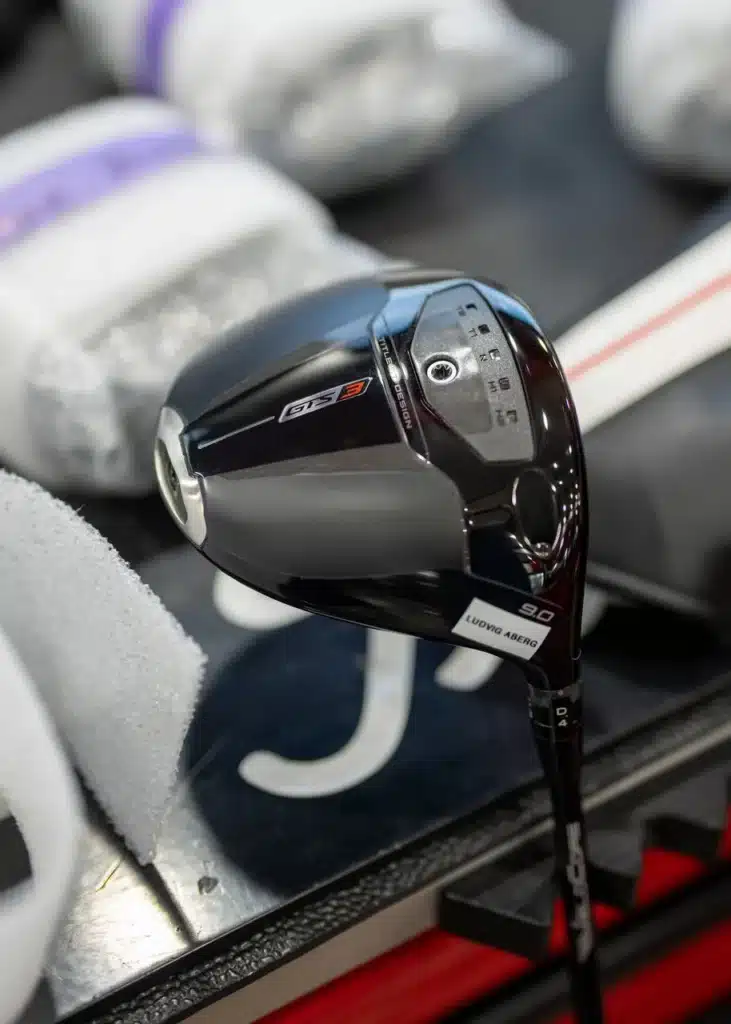
The final verdict: the Titleist GTS4, 9 degrees, standard settings, paired with the Graphite Design Tour AD FI 6X at 45.5 inches.
Not because it violated physics. Not because it represented some mythical “generational leap.” But because within the permanent constraints of golf, it negotiated the compromises more elegantly than the others. And because, for brief moments during the fitting, it accomplished the only thing truly sophisticated equipment can accomplish, It got out of the way.
Photos Courtesy of the Acushnet Company